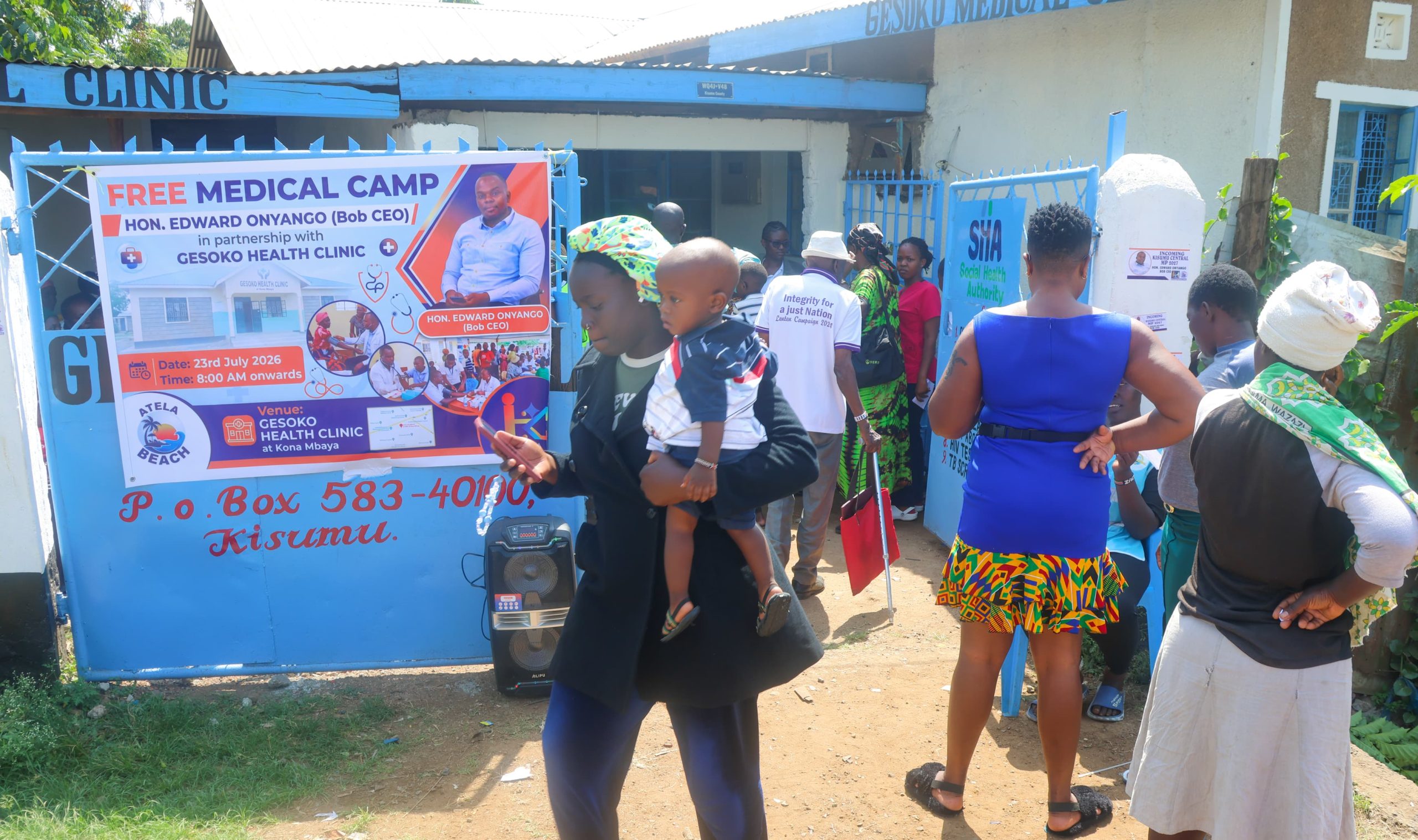
KISUMU,Kenya –On a warm morning in Kisumu, Joyland Special School came alive as schoolchildren and community members with disability lined up for health services rarely tailored to their needs.
One by one, they moved between screening stations where partners under the Lake side CBO conducted tests for breast cancer, sickle cell disease, malaria, and typhoid.
For many Persons with Disabilities (PWDs), accessing preventive healthcare remains a challenge due to physical barriers, stigma, and limited resources. The sensitization programme sought to bridge that gap by bringing essential services directly to the community.
Lily Webala, the Chief Executive Officer of Zuwi Afya CBO, an organization whose core thematic focus is health, particularly sickle cell says misinformation remains one of the biggest challenges in addressing the disease.
“We have a lot of work to do in this community because people have so many assumptions about sickle cell. One of them is the belief that if you have sickle cell you will die at five years, yet we have warriors in our CBO who are 33 and 35 years old. You can live beyond that,” said Webala during the event held on Tuesday 3rd February.
She notes that awareness without action is not enough. As part of the initiative, the team ensured that sensitization was matched with tangible services.
“We offered genotype screening, free medical services, medication, and assistive devices. We screened students with disabilities for malaria and breast cancer and sensitized the community on the importance of knowing their genotype,” she explained.

Webala states that, “For sickle cell, we advise people to know their genotype so they can make informed decisions about marriage and how to manage the condition.”
Beyond health services, the programme also focused on inclusion and recognition of persons with disabilities.
Edwin Okinyi, the Executive Director of Lake Side CBO, in charge of PWD mentorship, said the initiative went beyond screenings.
“We are conducting mass registration of PWD students who are unregistered at the national level, issuing disability certificates, and providing assistive devices such as wheelchairs and crutches,” said Okinyi.
“We also want PWDs to feel heard, valued, and loved. If God blesses us, we plan to extend this initiative beyond the Kisumu region.”
Among the partners was Heart to Heart Smile, an organization founded by Lavin Ochea, whose personal experience as a caregiver inspired her advocacy work.
“I have a brother who has schizophrenia and at times he would become aggressive so my mother had a very hard time taking care of him, the experience is not easy and now we have a caregiver who administers his medication and injections, and the support has made a huge difference for our family,” Ochea shared.
Towards this end, Ochea is also at the forefront of mobilizing caregivers to take advantage of the newly signed Disability Act, signed by President William Ruto which formally recognizes caregivers in Kenya.
“The Act is still in its inception stage, and for it to be fully implemented we need to onboard all caregivers,” she said.

“We have national representation, and I am the Kisumu representative. We have created a WhatsApp platform where caregivers can come together to develop regulations we want pushed for implementation.”
While access to healthcare remains a challenge for many persons with disabilities, initiatives like this highlight what is possible when inclusion is placed at the centre of service delivery. Most stakeholders reiterated their commitment to push for the full implementation of the Disability Act.
They emphasised that such partnerships provide a practical roadmap for ensuring healthcare becomes a right enjoyed by all, not a privilege reserved for a few.