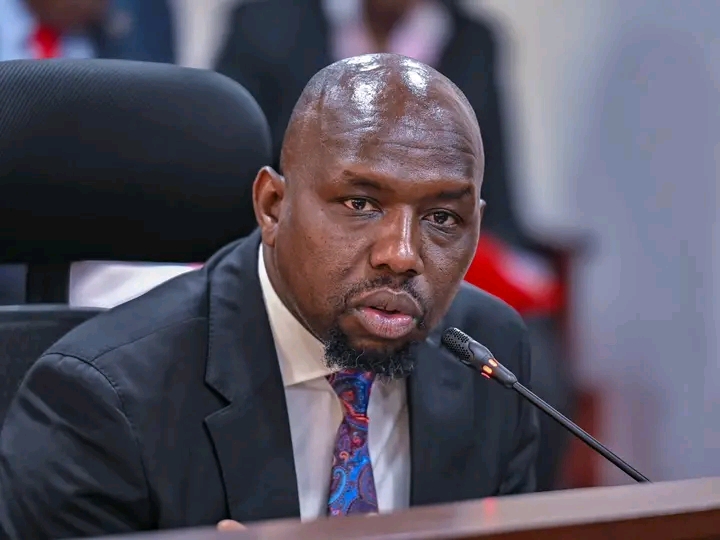
Cabinet Secretary for Interior and National Administration (CS), Kipchumba Murkomen, has announced that a special police unit will be formed soon to combat the spiralling threat of human trafficking in the country.
He said the move would enhance the enforcement of labour migration regulations and ensure perpetrators are held to account.
Kenya is one of the main sources of transit and the country of choice for human trafficking.
With more secrecy and complexity, the traffickers continue to use it as an ideal route between the Horn of Africa and the Arabian Peninsula.
“A dedicated police unit for human trafficking may soon become necessary. The scale and complexity of the problem demand it. It will operate like the Anti-Narcotic Unit,” he stated yesterday.
The Internal Security Chief was responding to national security matters when he appeared before the Narok West MP, Hon. Gabriel Tongoyo-led National Assembly Committee on Administration and Internal Security.
Multiple reports show that Labour and Sex trafficking cases are highly prevalent in Kenya. The exploitation of vulnerable children is at an alarming rate due to internal (rural-urban centres) trafficking.
According to the International Office of Migration (IOM- Kenya), forced marriages are also forms of trafficking.
What are the statistics?
The US Department of State’s 2024 Trafficking in Persons Report shows that Nairobi investigated 111 cases, which accounted for Sex (59) and Labour (10) trafficking, and 42 unspecified forms in 2022.
In 2021, it investigated 47 cases: Sex (5), Labour (17) trafficking, and 25 for unspecified forms.
Last year, the government identified 201 trafficking cases victims, compared to 556 in 2022.
“17 were exploited in labour trafficking, 55 in sex trafficking, and 129 in unspecified forms.”
The US report lists Kenya in Tier 2 for human trafficking in 2023.
This indicates that Nairobi has upscaled its anti-trafficking capacity efforts compared to the previous reporting periods.
“They included the implementation of a new Victim Identification Screening tool for Kenyan diplomatic missions to identify trafficking victims abroad, and adopting the 2022-2027 NAP,” the report reads in part.
It increased funding for anti-trafficking activities, more stringent vetting of labour recruitment agencies, and sensitisation programs for rural and coastal communities.
Support to Victims
The National Treasury allocated Sh 20 million ($127,800) to the National Assistance Trust Fund during the 2022-2023 and 2023-2024 fiscal years.
It disbursed more than Sh7.9 million ($50,862) from the kitty to directly support victims: Repatriation Assistance, Basic Needs, and Legal Assistance.
They also supported NGOs and rolled out an Economic Reintegration Program meant for trafficking survivors.
“It provided seed capital to 35 survivors to start Micro, Small, and Medium Enterprises (MSMES).”
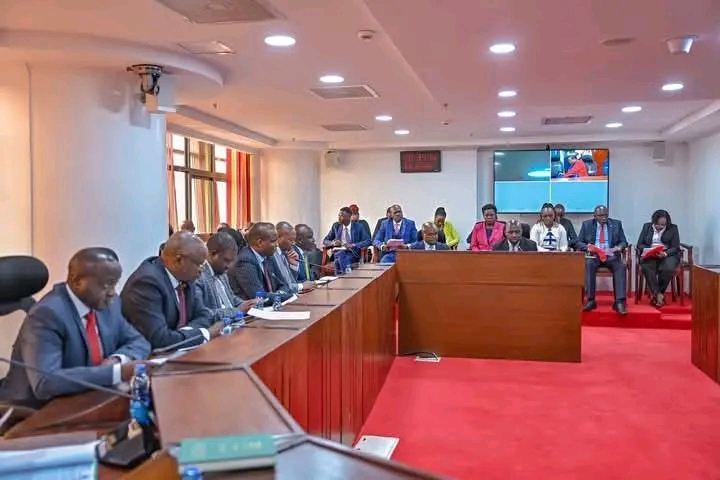
During the meeting, the cold-blooded murder of Isaak Abdulla Jarso in Kone, and the delayed appointment of Chiefs and Assistant Chiefs in Nyaribari Masaba Constituency were among the sticky issues.
CS Murkomen informed the legislators that they were seeking funds from the Treasury to enhance the operationalisation and gazettal of administrative units.
“We are currently reviewing the National Administration Policy to streamline the scheme of service for National Government Administrative Officers (NGAO), mainly to assist in promotion, career progression, and remuneration,” he explained.
Efforts are underway to streamline the command structure and improve the welfare of the National Police Reservists through the enactment of the National Police Reservists Policy.
It will provide a legal framework for enhanced security operations in remote and volatile areas.
“Speedily address the escalating violent clashes between police and residents of Likuyani Constituency, the disappearance and subsequent death of Ms Lydin Tokeshi Bukhala,” the MPs concluded.