

KISUMU, Kenya August 19th –The textile technology institute manager at the Sh1.2 billion factory at the Kisumu National Polytechnic, Mr Peter Mugo, has revealed that they are in talks with non-profit making organisations in Western Kenya on how to secure raw materials ahead of its anticipated opening and operations.
Mr Mugo said they are also consulting cooperatives and SACCOs that deal in cotton farming in readiness for the growing of cotton.
Speaking at the facility while in the company of the visiting EASTRIP delegation, Mr Mugo said the move will assist in the production of garments alongside training while the facility is fully operational.
Homa Bay Governor Gladys Wanga recently revealed that they, in conjunction with Equity Bank, have entered into a partnership to revive the 29 cotton ginneries in the area.
Wanga said the move is aimed at reviving cotton farming and textile production to empower locals. The textile hub Kisumu is also expected to benefit from the gesture.
Contractors of the facility earlier said they are putting the final touches on the project, which is set to be handed over very soon.
The Dama Services Limited Director David Kanja briefed a team of government and World Bank officials on the progress of the project, saying that, upon completion, the facility will enrol up to 6,000 students annually from Kenya and beyond.
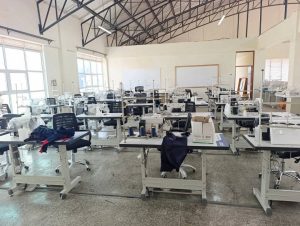
The centre will house a factory, laboratories, tuition blocks, studios and hostels.
Officials from the Ministry of Education and the World Bank who toured the project expressed confidence in the ongoing construction work.
Under the programme, Kisumu National Polytechnic has been identified as a centre of excellence for textiles.
This is set to be a big boost to cotton farming in the Nyanza region, which declined significantly after the collapse of Kisumu Cotton Mills (KICOMI), which was the mainstay for thousands of farmers in the area.
Already more than 30,000 farmers have been engaged and advised to plant BT cotton, which is highly productive and profitable.
The Polytechnic Chief Principal, Catherine Kelonye, said the project and scope of work were virtually complete, praising the contractor and Dama Services Limited for the quality of work.
“Textile technology is not the common garment-making that we have. Our garment department is just a backbone,” she said.
Kelonye said they are also looking at having the expansive cotton growing in Siaya county where they have the KNP school of agriculture.
“We are urging farmers in this region to embark on the massive growth of cotton because the textile industry provides a ready market,” she said.
Kelonye said the institution is working with other technical and vocational training institutions to revive the sector.

Director of Research and Innovations at the institution, Nyangara Asaka, said the program targets 16 institutions in Kenya, Ethiopia and Tanzania.
He noted that the project targets to revamp the sector from the farm level to the fashion exhibition stage, and that they are developing a cluster of TVET institutions to jointly exploit the latest technology to revive the ailing textiles industry.
“We are working with stakeholders on the value chain, including farmers, Small and Medium Enterprises, technicians and researchers, to make the sector vibrant once again,” Nyangara said.
He reiterated that through working with all parties along the cotton value chain, new enterprises were expected to sprout and span economic development in the area.

Nyangara disclosed that 65 percent of the funds shall go towards the purchase of equipment and building of the required infrastructure.
Nyangara said the project’s main goal is to make textile products from Kenya and the East African region meet international standards.
The centre is under the Sh1.08 billion program aimed to revive the textile industry in the country through a partnership between the Ministry of Education and the World Bank.
The project is part of the World Bank funding, which seeks to support the development and delivery of demand-driven TVET programs for technician training in Kenya, Ethiopia and Tanzania in the transport, energy, manufacturing and ICT sectors.

