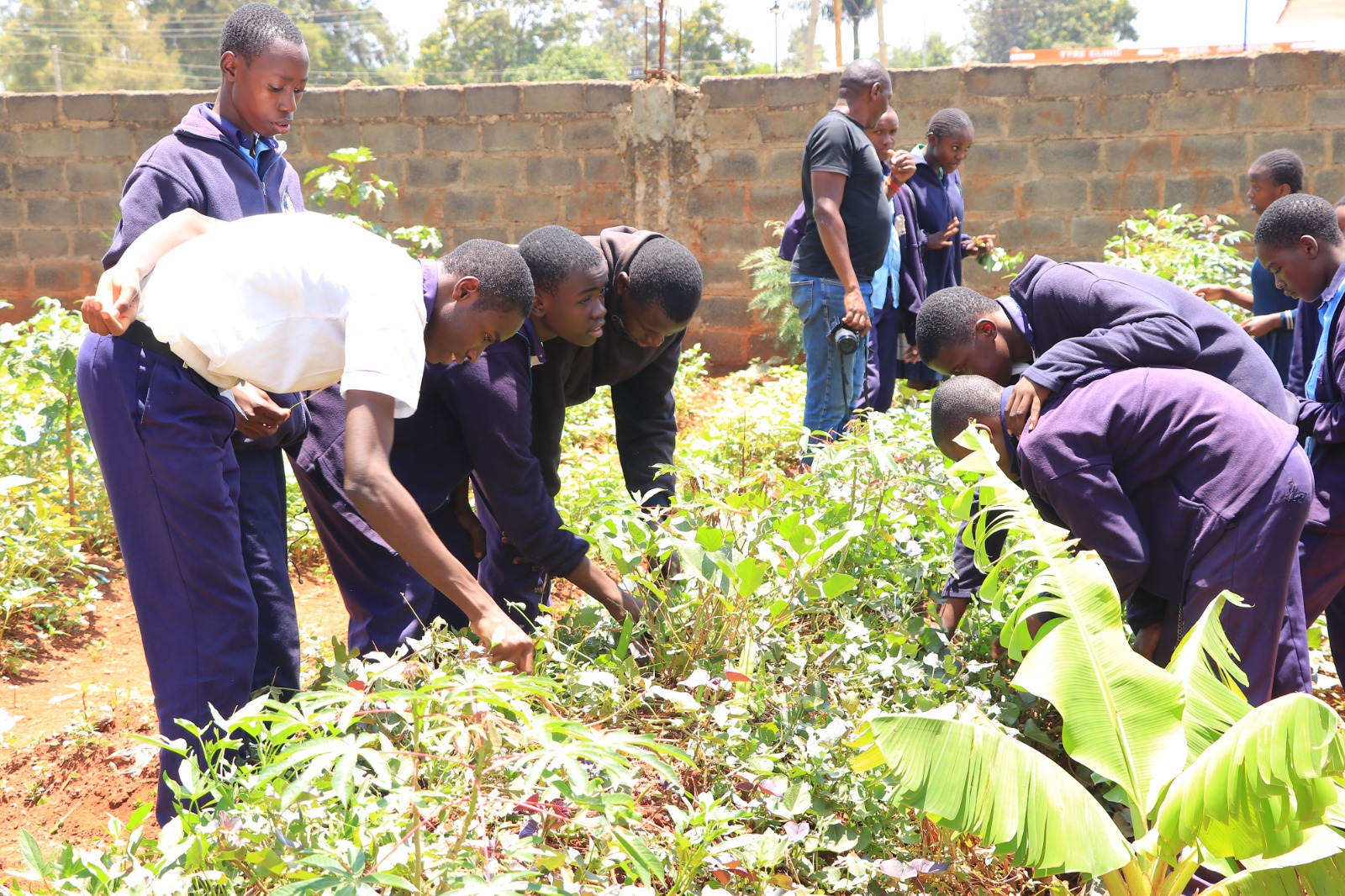
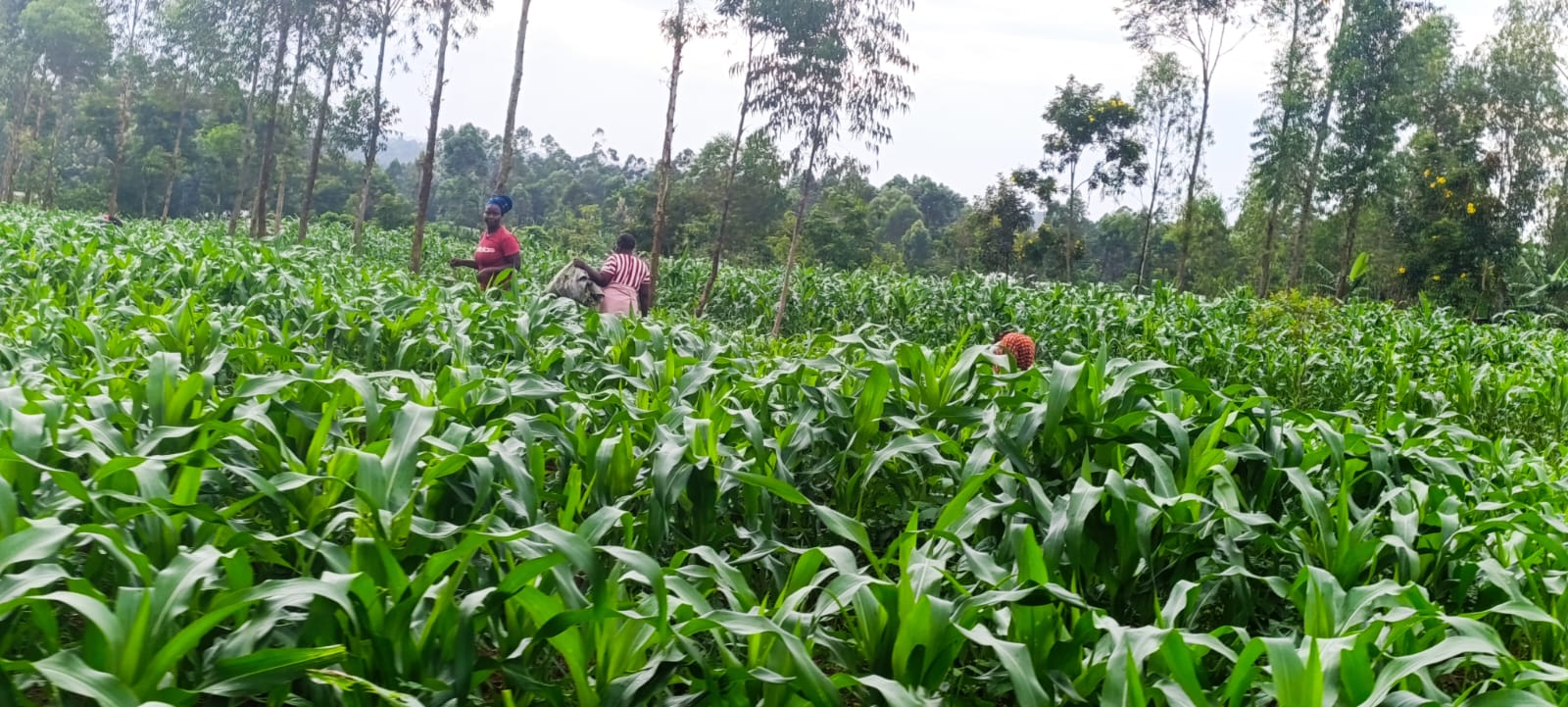
On a long, dry, windy season, the sun mercilessly scorches the sprawling sugarcane farms in the Nyando Sugar Belt Region.
At 2 pm, Jeremiah Okeyo,61, a sugarcane farmer, is glued to his two-acre leased farm, full of passion and steely determination to complete weeding before the anticipated rains.
Commonly referred to as Japur (farmer), his source of livelihood is the farm located in the Achego area, Muhoroni Sub-County in Kisumu County since 1999.
With every hoe-digging of the soil, his sweat-drenched body reminds Japur of the need to ensure that his next harvest yields better returns than the previous ones.
Declining Yields
Like other farmers and sugar millers in the area, he has suffered from declining cane productivity and quality.
“Despite my consistent efforts, my bumper cane harvests have been steadily declining each year. It seems that the soil in this area is deteriorating, and with limited resources, I often struggle to find the right fertilisers and sugarcane varieties,” Japur explained as he paused to wipe away the sweat rolling down his face during an exclusive interview with this writer.
Clad in green overalls and black gumboots, a father of twelve children (seven daughters and five sons) was born of five wives (two deceased) said that in some instances, the delayed rains always make the cane use its nutrients, leading to the sprouting of flowers.
Born in 1963 and hailing from Gendia-Kendu Bay, Japur reveals that he was motivated by his cotton-growing father to embrace sugarcane farming.
“My father used to complain that cotton growers were not well-treated and underpaid in our area. I developed an interest in sugarcane growing as the farmers had better returns and lived a modest life in the late 1970s and 80s,” he pointed out as some obandas (casual labourers) joined us under one of the trees nearby.
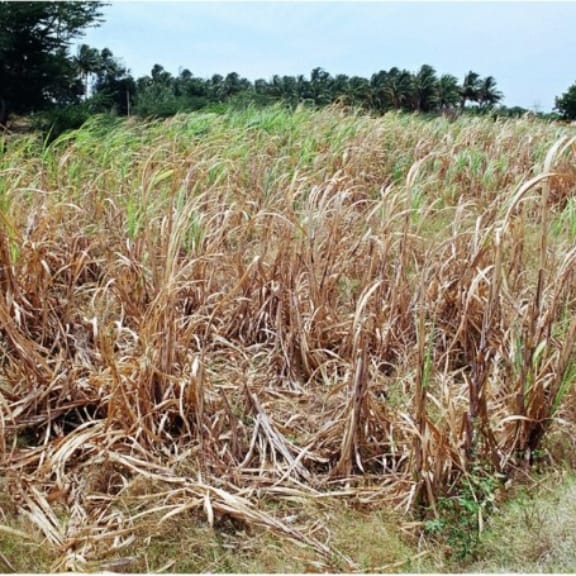
Echoing similar sentiments is Margaret Wafula, a smallholder sugarcane farmer in Vihiga County.
Her once-thriving sugarcane farm now struggles with dwindling yields. The canes appear wilted and sparse, affected by disease and inadequate rainfall.
“I have been working tirelessly to revive the ailing crop for our family sustenance,” said the widow, oblivious that years of intensive farming without proper soil management have taken their toll.
Another sticky issue faced by farmers like Margaret and Japur is Nutrient Mining: due to continuous cultivation, insufficient nutrient supplementation for plant requirements, and high levels of erosion.
It also includes leaching and removal of crop residue from the fields.
Land Overutilization
According to the book titled “Protection and Rehabilitation of Degraded Soils in Western Kenya: Experiences from Two Decades of Research and Development,” over-exploitation of land for ecosystem services and income generation has resulted in extensive land degradation.
It has also contributed to persistent degradation of biological productivity and ecological integrity, and loss of human value.
The co-authored book published on March 15, 2024, highlights that the soils in the region have undergone nutrient depletion and erosion. This has led to a low food supply and insufficient incomes for many smallholder farms.
The book was sponsored by GIZ (Deutsche Gesellschaft für Internationale Zusammenarbeit GmbH), a specific project in Western Kenya.
Similarly, it was part of the Soil Protection and Rehabilitation (ProSoil) initiative, funded by BMZ’s (German Federal Ministry for Economic Cooperation and Development) “One World Without Hunger” initiative.
Additionally, climate change has exacerbated these problems by causing unpredictable droughts and varying rainfall patterns, which are now less frequent but more intense.
Economically viable best practices for sustainable land use are well-known to farmers, but are applied to a limited extent due to a lack of socio-political goodwill.
Consequently, farmers lack incentives like secure land rights for agricultural enterprises to ensure that they sustainably utilize soil resources.
The majority of smallholder farmers have inadequate know-how to apply soil-friendly farming methods on their farms, or the money for initial investments.
The book further explains that a fifth of the world’s total land area is already degraded due to years of unsustainable land-use practices, land-use changes, and extreme weather events.
“Recent studies indicate that more than half of the world’s fertile soils are now classified as highly degraded, with 25 to 40 billion tons lost annually.
In Sub-Saharan Africa (SSA), land degradation is estimated to affect about 67 percent of the total area of the land (16.1 per square km) with varying degrees of severity.
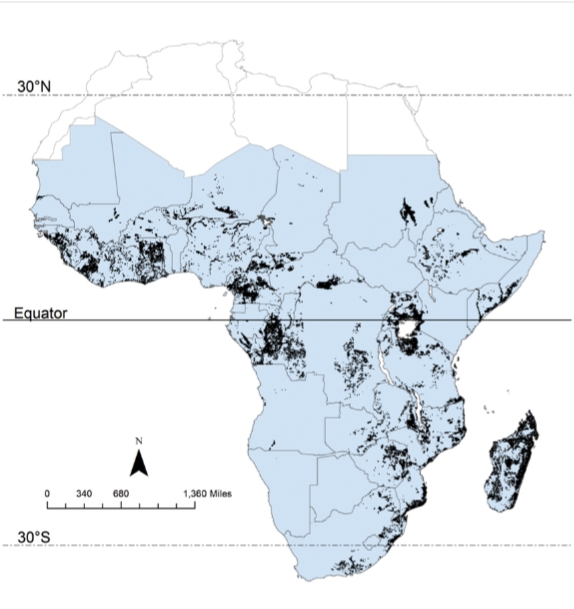
The main direct drivers contributing to land degradation in SSA include unsustainable agricultural practices, over-grazing of livestock, and over-exploitation of forests and woodlands.
In addition, several waterways in SSA have been subject to significant pressure, particularly in the semi-arid and sub-humid zones where rivers are over-exploited and eutrophication is prevalent.
Population Growth
Shiferaw et al, also note that poor water and land management in SSA is attributed to the increasing population growth coupled with poor or inadequate incentive structures for local resource managers, climate change, and rampant poverty.
Recent studies in Kenya indicate that 12-15 percent of the country’s land area, which supports 27 percent of its population, is experiencing severe to very severe degradation, particularly in the western and southern regions.
Western Kenya is one of the most densely populated and impoverished regions, with a population density rising to over 1,046 people per square km in Vihiga County, which is above the national Kenyan average of 66 persons per Km2.
Land fragmentation and high population in the rural areas have rendered unsustainable the traditional land management was based on fallowing unproductive fields to restore soil fertility.
This, however, has led to increased rates of soil erosion, landslides, soil nutrient loss, soil acidity, and physical degradation, which have consequences for low productivity in the region.
“The rate of landscape degradation is increasing rapidly, with soils lost on average 0.5 t ha-1 year-1 in 2017 compared to 0.3 t ha-1 in 1995. Physical mechanisms of soil degradation prevalent in the area include erosion by water, compaction, hard setting, surface sealing, crusting, and degradation of soil structure,” the book reads in part.
The leading chemical processes include soil nutrient loss, soil organic matter loss, soil acidification and dominant biotic processes such as pest infestations.
Other factors include various changes in vegetation cover and composition (loss of habitat), pollinator population and composition, and soil biota.
The Nature.com postulates that Soil Biota consists of micro-organisms (bacteria, fungi, archaea, and algae), soil animals (protozoa, nematodes, mites, springtails, spiders, insects, and earthworms) and plants (Soil Quality Institute 2001) living all or part of their lives in or on the soil or pedosphere.
Research studies show that soil acidity in the sugarcane region is due to monoculture coupled with the excessive use of chemical fertilisers. Agricultural liming is recommended, though its application method is neither safe nor
What is the solution?
To address these crop yield concerns, Dr Reuben Nzioka, of Soil Vitalizer, urges farmers to fully use organic fertilisers, as they are assured of safe, healthy food and an increase in yields.
He was strongly encouraged by the farmers who repeatedly asked him one question: “Could you develop a product that we can purchase once, without needing to return to the shop for another one?”
The Athi River-based firm began getting good results for the first product for testing and analysis in April, which scaled up commercialization based on demand in July 2023.
He says that they’ve continued to show their commitment to sustainable and environmentally friendly solutions that promote healthier plant growth and support organic living.
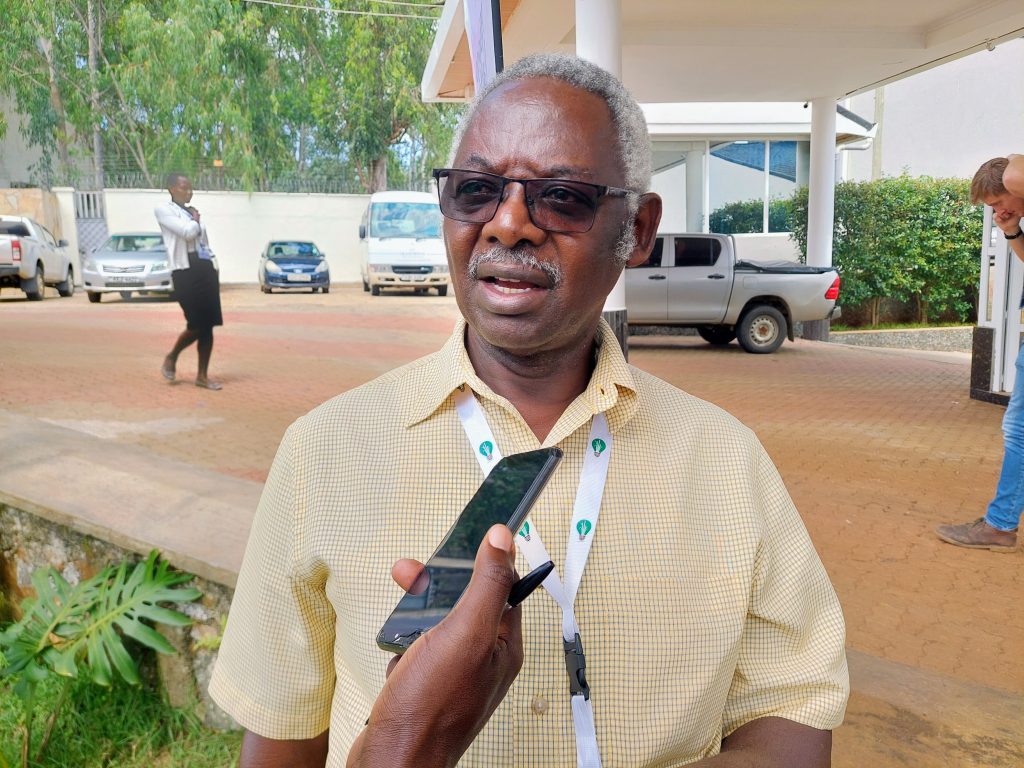
“Many people have not explored the benefits of organic farming and still rely on cow dung manure, which is beneficial. However, it’s important to note that the cow has already absorbed some of the nutrients, meaning that what you’re applying to the farm is essentially a leftover product,” explained Dr. Nzuki (pictured above).
Liquid Organic Fertilizer
In 2019, he single-handedly started the SV-L (Liquid Organic Fertiliser) product, which took him 3 years of research and development work to complete.
It is made from 100 percent biodegradable materials and is an all-year-round product that increases moisture since it is in liquid form.
SV-L contains both Macro (NPK) rich fertiliser and plenty of Micronutrients (trace) like (Fe, Ca, Mn, Mg, Cu, S, B, Mo, Zn ), which are measured in Parts Per Million (PPM).
“It revitalises degraded soil, stabilises soil pH, increases microbes’ activity, increases water retention, promotes crop resilience, increases crop production, improves crop shelf life, and improves crop taste,” Dr Nzuki assures.
Some of its readily available products in the market are SV-FP (Folia Pesticide) and SV-S (Solid Organic Fertilizer).
According to Dr Nzuki, the SV-FP is an all-in-one product specifically engineered to address bacteria, pests, fungi, and adverse weather attacks.
The biological treatment properties are carried by a nutrient-rich mixture that provides plant’s needs, as it has been treated for whatever pathogen has attacked it.
“They don’t have adverse effects on plants or humans, but four days’ withdrawal after application is needed before harvesting. The duration allows the plant to benefit from the treatment SV-P provides and helps to ensure the treatment material is not consumed by humans as it will have no direct benefit,” he explained.
On the other hand, SV-S are in either Granules or Pellets.
“Granules are suitable for machine application, whereas pellets are meant for general hand application. They are particularly beneficial for dry time planting because they stay in place and can be used alongside seeds that are waiting for rainfall or watering.”
Dr. Nzuki also noted that they do not leach and remain in the soil for an extended period.
For perennial plants, it’s best applied twice a year before rainfall and the flowering season.
The market is awash with a variety of fertilizers for top dressing and folia pesticides.

He clarifies that in terms of the nutrients and crops for the ground, using a 4-litre of SV-L is enough without a farmer going back to the shop to buy anything else.
“Probably if you have a serious pesticide problem, but it is enough to grow one acre of whatever food crop through mixing and applying. We got good feedback from the farmers on various crops like coffee,” he said.
The SV-L product is patented (copyright), and they have received numerous requests from institutions like Kibos Sugar Millers and Kenya Sugar Research Foundation for joint research work on sugarcane for farmers’ benefit.
“We have collaborated with Lattia, a farmers’ research organisation in Kitengela, and discovered that vegetables grown with SV-L weighed 1.7 kilograms, while those fertilised with other products weighed only 900 grams. These results are well-documented by Lattia.
He attributed cancer cases to the food we consume due to the heavy chemicals used in planting, and spraying which leads to the death of agronomics.
“Anybody who cares for their health will consider the organic solution. SVL is a safe, and friendlier to the body,” Dr Nzuki said as he expounded on Supporting Organic Living.
Sustainable Agriculture
In 2005, the Kenya Organic Agriculture Network (KOAN) was founded as a national body that promotes sustainable organic agriculture practices and represents over 200,000 farmers and exporters in Kenya.
They also provide training, market linkages, and advocacy campaigns.
Significantly, KOAN plays a vital role in developing organic standards and policies, including the East Africa Organic Products Standards and the Kilimohai brand.
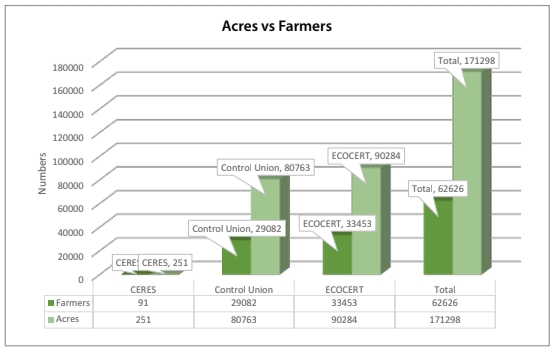
This indicates an increase in organic farms from 8,004 in 2007 to 62,626 in 2022, along with a corresponding rise in organic land area from 84,538 hectares to 171,298 hectares.

This growth is driven by increased demand for organic food, both locally and for export, as consumers become more conscious of health and environmental concerns.
Remarkable progress has been seen in the growth of certified organic farmers from 54,386 in 2021 to 62,626 in 2023. The area under organic management rose from 168,412 hectares in 2021 to 171,298 hectares in 2023.
According to the Kenya Organic Data Survey 2024 conducted by KOAN, the area of organic land has consistently increased, growing from 84,538 hectares in 2007 to 171,298 hectares in 2022.
This upward trajectory in 2012-2013 and 2014-2015, reflects a positive shift towards organic agriculture and the sector’s
resilience and potential for further growth in the country’s agricultural lands
It is worth noting that the Kenya Sugar Research Institute’s (KSRI) role is to develop demand-driven production technologies and innovations for sugarcane.
This also includes related crops and their derivatives; the milling of such crops, and marketing of sugar and its co-products.
Increase Productivity
One of its key areas of focus has been the Crop Variety Development after the realisation of cyclic and fluctuating yields across the country.
According to KSRI headquartered along Kisumu-Miwani road, the yields currently stand at 57 tons per ha against a potential of 100 tons per ha which hasn’t made it possible for farmers to break even.
“They have been unable to recoup the investments they put towards sugarcane farming. As an institution (breeders) we are challenged to develop varieties that will be able to increase productivity (yields and sucrose content) to the farmers and millers respectively,” KSRI elaborates.

Over the years, the institute has been able to develop 27 varieties: Early maturation between 14-16 months depending on the altitude; and high yields of 100 tons per ha depending on the level of management.
Similarly, the variety is quite resilient in terms of disease and pest filtration, and has been recommended to fit in specific sugarcane catchment areas.
In the Nyando Sugar Belt (Central Catchment Area), the suitable varieties that can withstand stress and waterlogging are CAN 95-378, CAN 95-593, CAN 97-317, CAN 98-530, CAN 98-551, CAN 00-3811, CAN 83-737, and CAN 82-808,” the KSRI official explained this during the Kenya Sugar Innovation and Expo.
These varieties have got a high sucrose content of 12-15 percent as opposed to old commercial ones.
“It has very high fibre which compromises the cane quality to less than 10 percent. The miller is not able to plough back his returns as they resort to diversification (bagasse for multiproduct) instead of sugar production.”
Increase Metric Tons
As part of solving the challenges faced by sugarcane farmers across the country, the Kenya Sugar Board (KSB) launched a guide that will aid in achieving the projected growth
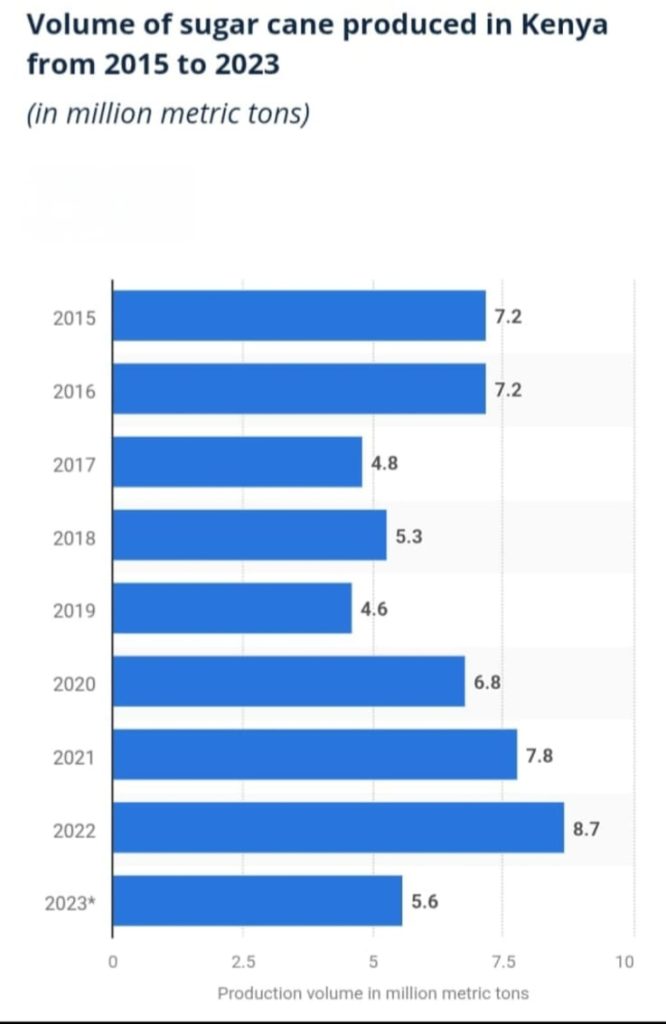
KSB Chairman Eg. Nicholas Gumbo says that they expect to double the current 700,000 metric tons to one million metric tons in the coming years.
Affirming this position, KSB CEO Reuben Chesire said that they will strive to reduce the cost of cane production.
“We will focus more on the sugarcane byproducts like biofuels, alcohol, spirits, and bagasse to make briquettes and paper out of it,” he said.
This, they added, will help in building a climate-resilient economy to reduce the effects of Climate Change.
To further increase their farm yields, Margaret and Japur, who also attended the four-day Sugar Expo, were also able to learn more about the Miwa Bora Mobile App that provides information and services related to the sugar Industry.
“It helps farmers, traders, millers, researchers, investors, extension workers, and other stakeholders in the sector to access and share information on best practices,” the KSB website explains.

It is also curated with new technologies, weather, market prices, and other relevant information.
Japur and Margaret further decried that farmers incur losses due to weighing and longer delays in the cane payment system and appealed for the introduction of sugarcane bonuses like their coffee and tea counterparts.
To iron out shortcomings in payment, which is largely based on weight irrespective of cane quality, KSB’s Guidebook titled, “Quality Based Cane Payment System,” aims to provide a strong incentive for growers to maximize sugar content in cane and millers (processors) to maximize sugar recovery.
The system involves the allocation of industry revenue to support value-added activities of growers, millers, and marketers.
“It addresses the decline in productivity, concerns about sustainable development, equitable sharing of benefits, and the drop in cane quality and factory performance,” the guide states.
It also lays emphasis on creating an enabling cane price sharing formula, quality risks and benefits, adoption of improved varieties, farmers’ arrears, and lack of industry competitiveness.
Margaret and Japur are urging both tiers of government (national and county) to employ more Agricultural Extension Officers to visit farmers and impart additional knowledge and skills on innovations to improve yields and cane quality.