

NYALENDA, Kisumu, Monday, March 9, 2026 –Small-scale farmers from Nyalenda Kapuothe in Kisumu Central Sub-County on Friday gathered at the Nyalenda Health Centre Hall for Seed Fair Mashinani on Friday 6th, a fair aimed at preserving indigenous seeds and protecting traditional crops from extinction.
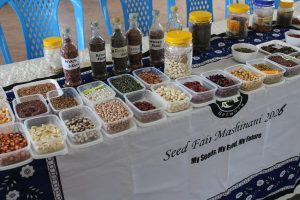
On tables across the hall, colourful varieties of maize, cowpeas, pumpkins, and indigenous leafy vegetables were carefully displayed as farmers exchanged seeds and shared traditional knowledge.
This grassroots movement, in which farmers exchange indigenous seeds and knowledge, protects Kenya’s agricultural heritage and was organised by the Seed Savers Network.
Jeniffer Adoyo, a seed ambassador at Seed Savers Network, said the main goal of the fair was to help farmers take control of their own seeds and protect traditional crop varieties that risk disappearing.
“We are trying to help farmers learn how to regenerate their own seeds from their farms, in this way we teach them how to study the crops from planting, harvest the seeds, process them and preserve them using traditional methods,” said Adoyo.
According to Adoyo One major aspect of seed preservation promoted by the organisation is
seed banking, and this is the knowledge she wanted to enlighten farmers about. She says Seed Banks allow farmers to store different varieties of seeds so they remain available for future in use planting seasons and during community events like seed fairs, farmers bring seeds they have preserved.
“If you attend the fair and find a seed you do not have, you can buy a small portion and
preserve it,” Adoyo explains.
During the fair, they had a session to educate the farmers on better traditional ways of
preserving the seeds.
“Preserving seeds is both a science and a tradition passed down through generations. We are teaching farmers to use organic techniques such as brick dust, ash from burnt banana peels, crushed maize cobs, and dried husks to protect the seeds from pests and moisture, these methods ensure the seeds remain viable without the need for chemical treatments, “revealed Adoyo.
“We have a variety of seeds today, we have maize with four varieties, white maize, yellow, a purplish one, and a white one called Panadol, reddish one traditionally known as Nyamilambo, for cowpeas, we have four varieties, where one of them I sourced from Machakos, bred it so that people within can access it,” she explained.
She added that they also have kales traditionally known as saga, managu, mrenda, Ethiopian kales, mitoo, and kandhira, pumpkin seeds that can be used as a fruit and vegetable.
“We have about 26 different varieties of vegetables, fruits, and grains. By preserving these seeds, farmers are not only protecting biodiversity but also building a more sustainable food system.”
For years, farming has often been seen as an unattractive occupation among youth, but organisations involved in seed conservation are working to change that perception.
“Most people say farming is a dirty job, but many youths are beginning to realise that
agriculture can provide good returns if you are dedicated and ready to learn,” said Adoyo.
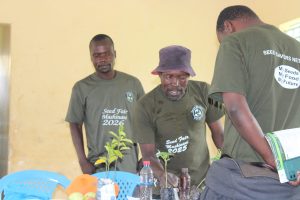
Jeremiah Gaoria, Project Officer of the Climate Change Department at Nyalenda Young Turks CBO, called on the youths to embrace sustainable agriculture and form organisations that make it easy for the government to offer help.
“I want to encourage them to have groups so that it can be easy for the government to work with them, it will also help them to interconnect with other youths and grab the opportunities that come,” advised Gaoria.
Beyond seed exchange, Jennifer emphasises that the fairs are also an opportunity to celebrate traditional food and pass down knowledge, which the farmers showed by sharing indigenous meals, cassava, sweet potatoes, and traditional porridge.
2 thoughts on “Seed Fair Mashinani Helps Kisumu Farmers Save Indigenous Crops from Extinction”