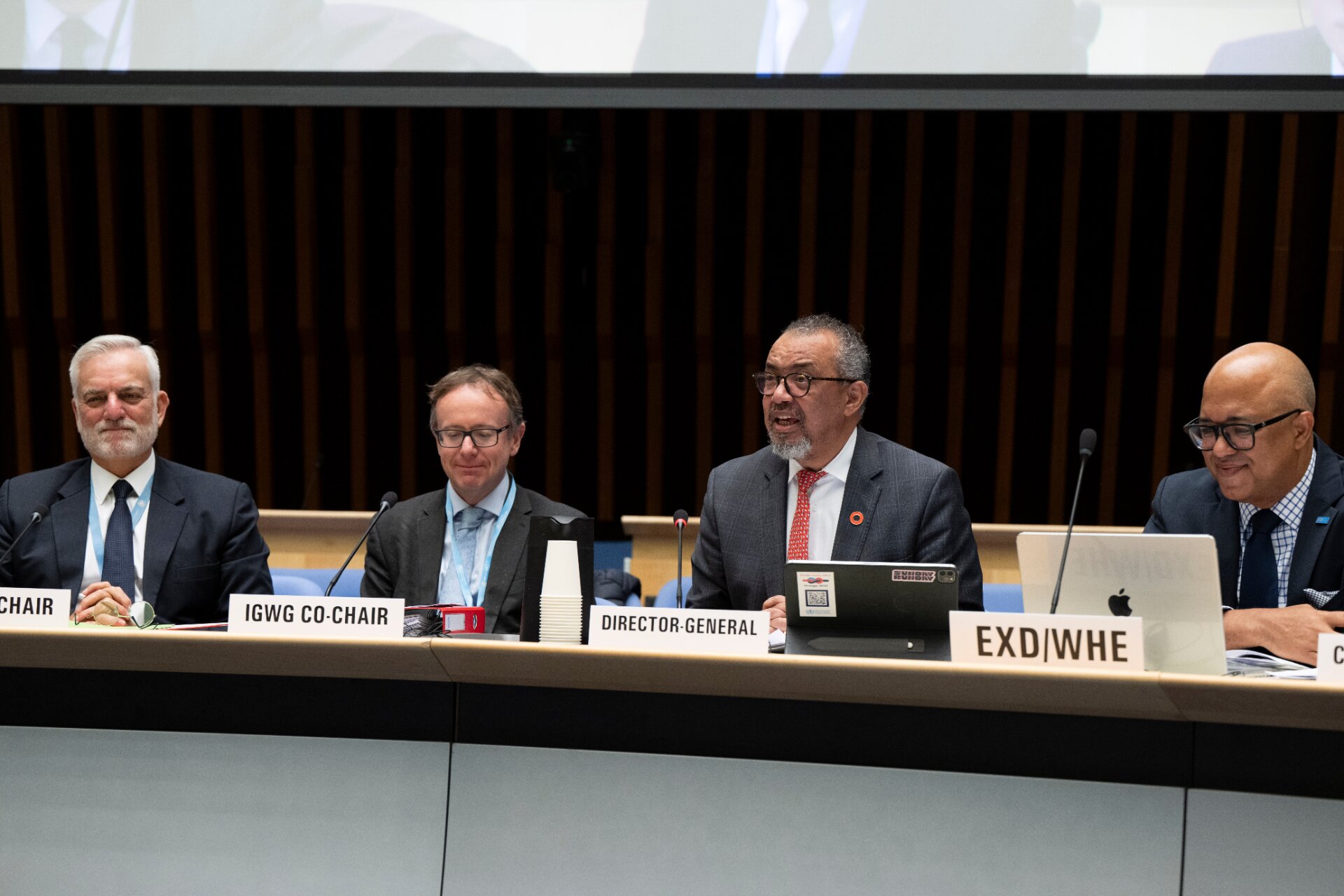
GENEVA, Switzerland– After a week of intensive discussions, member states of the World Health Organisation (WHO) have made significant headway in finalising a crucial annexe to the landmark Pandemic Agreement, designed to ensure the rapid sharing of pathogen data and the fair distribution of vaccines and treatments during future global health crises.
Delegates concluded the fifth meeting of the Intergovernmental Working Group (IGWG) on Saturday, wrapping up five days of negotiations from February 9–14 focused on the Pathogen Access and Benefit Sharing (PABS) system. The annexe is considered the operational engine of the broader Pandemic Agreement, which was adopted last year in the wake of the COVID-19 pandemic.
At its core, the PABS system aims to solve a critical equation: to stop a pandemic, scientists need immediate access to genetic sequences of emerging pathogens. In return, the countries that share that data are guaranteed access to the vaccines and tests developed from it. The current negotiations are focused on codifying this balance of speed and equity.
“Countries this week have again shown their steadfast commitment to getting the Pathogen Access and Benefit Sharing annexe done,” said Ambassador Tovar da Silva Nunes of Brazil, co-chair of the IGWG Bureau. “We now have a clear vision for streamlining the text, while ensuring that the more contentious elements receive the necessary consultation.”
While the tone of the discussions was described as constructive, officials acknowledged that significant hurdles remain. The clock is ticking toward a hard May deadline, when the finalised text must be presented to the World Health Assembly (WHA).
“As we conclude the fifth meeting… I want to thank delegations for their serious and constructive engagement,” said Mr Matthew Harpur of the United Kingdom, the other IGWG Bureau co-chair. “It is clear that important differences remain, but there is a shared recognition of what is at stake. With time running short, the coming weeks will be critical in bridging the remaining gaps.”

Beyond the formal negotiations, the session included dialogues aimed at building consensus among governments and consultations with key external stakeholders, including representatives from the private sector, academia, and major genetic sequence databases.
Director-General Dr Tedros Adhanom Ghebreyesus praised the “steady progress” being made, framing the work as an essential extension of the historic cooperation that birthed the original Pandemic Agreement.
“Adopting the Pandemic Agreement last year was a huge testament to global cooperation, and we need to build on that momentum,” Dr Tedros said.
“Strong multilateralism remains essential as countries have to face future pandemics together, collectively. Recognising the steady progress being made, I am confident that they will reach an agreement on the Pathogen Access and Benefit Sharing annexe in time for the World Health Assembly in May this year.”
Member States are scheduled to resume negotiations next month, entering what is expected to be the final and most critical phase of talks before the May deadline.