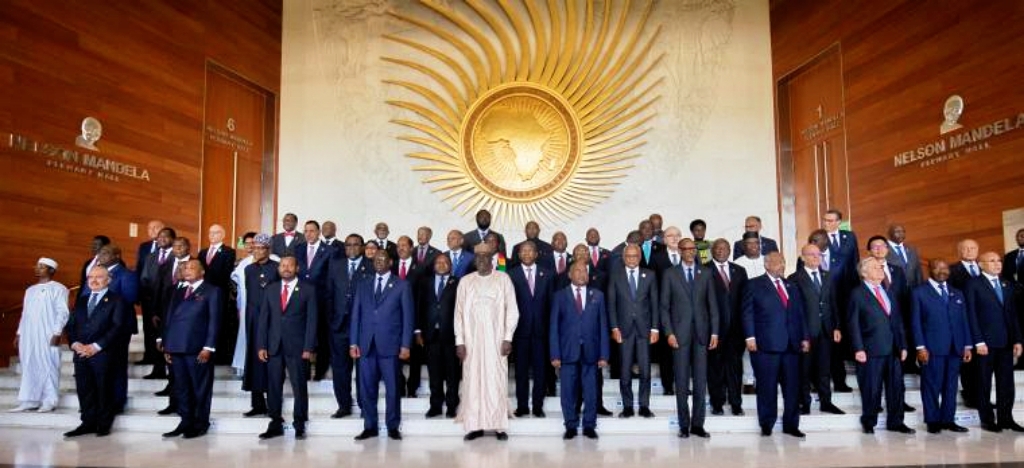
KISUMU, Kenya August 3 -The African Union’s Agenda 2063 envisions a continent that is united, peaceful, prosperous, and driven by its own citizens.
At the heart of this ambitious roadmap is the clarion call for Pan-Africanism—an ideal that speaks to the soul of our shared identity and collective future.
The dream of a united Africa is not abstract. It is possible, it is actionable, and it is within reach—if we pursue the right policies and cultivate the right mindset.
To turn this dream into reality, we must forge universal policies that embrace our unity in diversity, especially in the social, economic, and political realms.
Pan Africanism
True Pan-Africanism means breaking down artificial colonial-era borders—not just physically, but also psychologically and institutionally.
Fortunately, we are beginning to see encouraging steps in this direction.
Instruments such as the African Continental Free Trade Area (AfCFTA) are laying the groundwork for economic integration.
Sporting events like the CHAN (African Nations Championship) bring Africans together in celebration of our shared talents.
Cross-cultural marriages, academic exchanges, inter-African trade, and unrestricted movement across borders through visa-free regimes—all represent meaningful steps toward the vision of AU Agenda 2063.
Kenya, under the administration of President William Ruto, has set a shining example in advancing this cause.
By lifting visa requirements for fellow Africans, Kenya has demonstrated a profound commitment to a borderless Africa.
This is not just administrative convenience—it is a revolutionary gesture aligned with the AU’s long-term vision. It affirms Kenya’s role as a continental leader and a firm believer in the spirit of African unity.
Foster Cooperation
But for this dream to truly take shape, more African countries must follow suit.
The journey toward continental unity cannot be led by a few trailblazers while others drag their feet—or worse, reverse the progress. We must confront and question regressive policies that threaten to undo the gains we’ve made.
Recently, Tanzania made headlines by announcing that Kenyans would not be eligible for certain job opportunities.
Such declarations are not only short-sighted but run counter to the ideals of regional integration and Pan-Africanism.
At a time when Africa is trying to harmonise its markets, streamline labour mobility, and foster regional cooperation, these kinds of pronouncements are disheartening.
They create unnecessary rifts in what should be a shared journey toward collective prosperity.
Contrast this with what we witness daily on the streets of Kisumu, Migori, Kisii, Busia, Malaba, Namanga, Nairobi, and other towns bordering Uganda and Tanzania.
Traders from DRC Congo, Uganda, Tanzania, Rwanda, and Burundi freely sell shoes, cosmetics, foodstuffs, fabrics, and other goods.
These towns are living examples of African economic integration in action.
This is Pan-Africanism in real life—not just in political speeches or policy documents.
Natural Wealth
Let us not allow political rhetoric or narrow national interests to derail the progress we’ve made. As journalists, thought leaders, and citizens of this great continent, we must craft a positive narrative for Africa—one that highlights our strengths, celebrates our unity, and confronts our challenges honestly but constructively.
Africa is a land of infinite potential, endowed with natural wealth and a dynamic, youthful population. But its most untapped resource is its capacity for cooperation. We must nurture this spirit. We must market Africa as a place of innovation, opportunity, culture, and resilience.
To our leaders: Africa is greater than individuals. To our people: Our unity in diversity is our strength. Let us build on it, protect it, and pass it on to future generations.
Africa Hoyee! AU Hoyee! God bless Africa. God bless our leaders. And God bless every African who dares to dream positively of African values for you will emerge a true Pan Africanist.
The author is a media consultant, Senior writer, editor and regular advocate for good governance and democracy in Africa.kepherpeace@gmail.com