NAIROBI, 4 November 2026 – The world is heading for an overshoot of the 1.5°C warming limit, but efforts to adapt are moving too slowly, money is falling far short, and losses from climate disasters are piling up, a new United Nations Environment Programme (UNEP) report warns.
The 2026 Adaptation Gap Report: Ready? says expanded, effective and well-funded adaptation is now critical to cut risks, build resilience and support inclusive development. Yet international public adaptation finance from rich to poor countries remains a fraction of what is needed.
International public adaptation flows reached just US$28.2 to 31.7 billion in 2024, up by only US$1 billion from 2023. That is against an estimated need of US$305 billion a year by 2035 for developing countries alone. That figure, based on national climate pledges, adaptation plans and modelling, does not even include the private sector’s own needs, which could almost double it.
Even if countries meet the COP30 Global Mutirão aspiration to triple international public adaptation finance by 2035, that would only deliver US$85 to 120 billion a year — covering just 20 to 29 per cent of needs once inflation is factored in. Tripling flows to least developed countries and small island states would do better, meeting 49 to 83 per cent of their needs.
“The world is not ready to adapt to current climatic conditions, never mind what overshoot of 1.5°C will bring,” said Inger Andersen, UNEP Executive Director. “At climate COP31 in Türkiye and beyond, nations must focus on intensifying efforts to achieve the COP30 Global Mutirão aspiration of tripling adaptation finance by 2035 – while understanding that they will need to go even higher to save lives, avoid losses and damages and protect economies.”
Flows to least developed countries and small island developing states rose in real terms between 2019 and 2024, but have fallen from a 2022 peak when they should be rising.
There are some bright spots. The Glasgow Climate Pact goal to double finance from 2019 levels to US$40 billion by 2025 could still be met, largely because Multilateral Development Banks are likely to have sharply increased financing in 2025. Whether that happens will depend on whether bilateral flows are hit by falling official development assistance.
Finance flowing between developing countries themselves is also growing — through development banks and direct South-South cooperation — from US$3.8 billion in 2019 to US$9.6 billion in 2024. Private finance is also increasing, but it mostly covers the private sector’s own adaptation and could only close 15 to 20 per cent of the gap for more public adaptation work.
Money alone is not enough, the report notes. Governments are strengthening the systems needed to turn plans into action — adopting climate framework laws, creating platforms for policy learning, improving coordination across sectors and levels of government, and setting up dedicated mechanisms to mobilise and manage climate finance.
But without stronger mitigation and adaptation, climate-related losses and damages are already substantial. Finance for loss and damage is falling short, and complex procedures and limited capacity make support hard to access.
The first round of the Fund for responding to Loss and Damage, for example, drew requests worth US$2.8 billion, dwarfing its initial envelope of US$342 million. The full global loss and damage gap is still unknown.
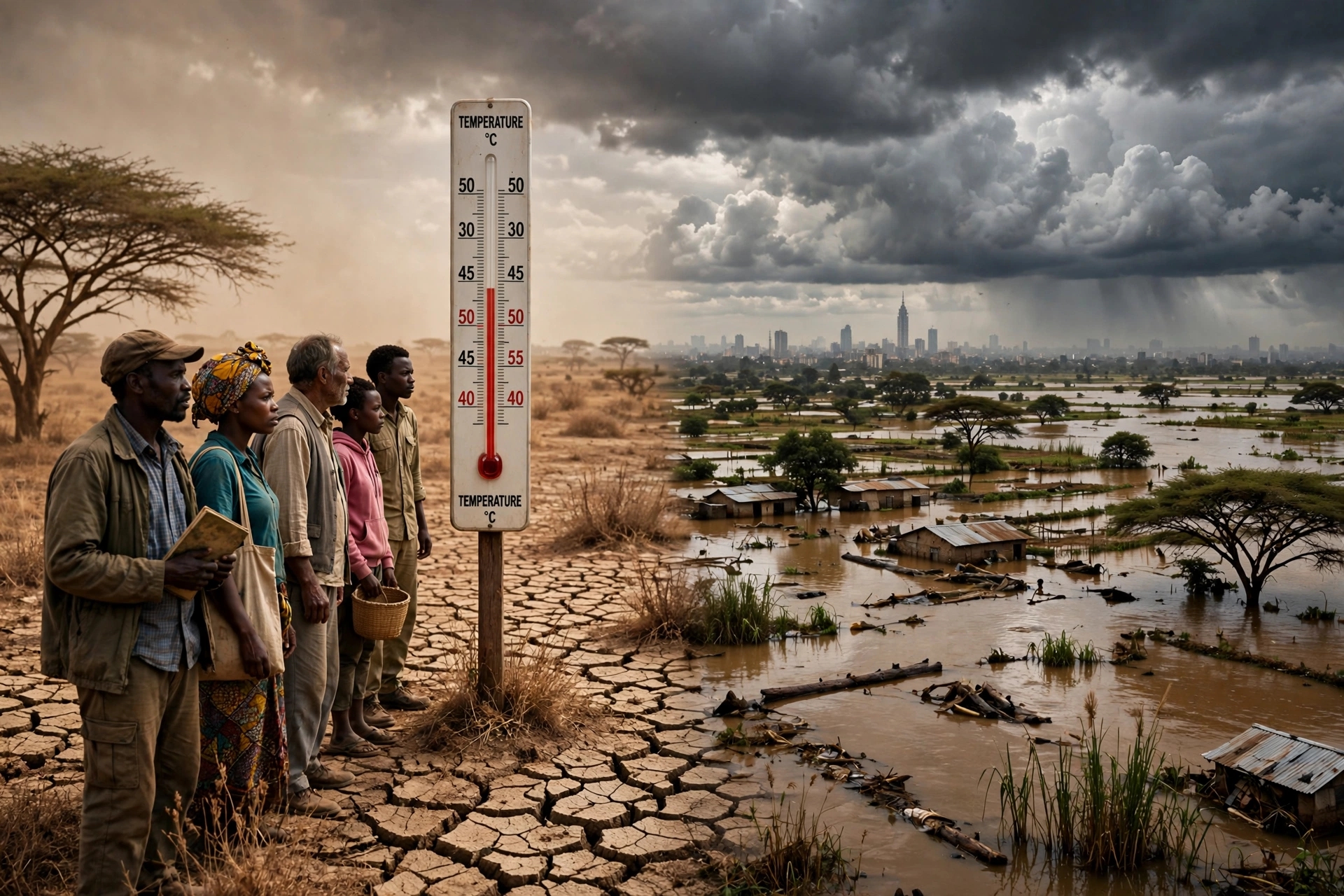
The report calls for stronger assessment capacity, adequate and predictable financial and technical support, simpler access procedures and meaningful participation of affected communities in shaping responses. Image: AI-generated