LUANDA,Angola,9th June 2026-The African Energy Commission of the African Union (AFREC), in partnership with the Government of the Republic of Angola, has officially launched a three-day Regional Workshop on the Mitigation of Methane Emissions in the Oil and Gas Sector.
The high-level initiative, which commenced yesterday in Luanda, aims to accelerate efforts to curb methane emissions while aligning Africa’s national development priorities and climate commitments with the growing global demand for environmental sustainability.
The opening ceremony was presided over by Angola’s Minister of the Environment, Ana Pereira, alongside her counterpart, the Minister of Mineral Resources, Oil, and Gas,Diamantino Azevedo.
In her opening remarks, Minister of Environment Ana Paula de Carvalho Pereira underscored the urgency of addressing methane, identifying it as one of the greenhouse gases with the most severe impact on climate change. She noted that reducing methane emissions represents one of the most immediate and effective levers available for global climate action.
”Methane mitigation delivers multiple benefits simultaneously, including improved environmental quality, better public health outcomes, and enhanced economic efficiency,” Pereira said.
For major oil and gas producers like Angola, the Minister emphasized the need for a “balanced, responsible, and pragmatic approach” that safeguards the environment without sacrificing economic growth, industrialization, or domestic energy security.
Echoing this stance, Minister of Mineral Resources, Oil, and Gas Diamantino Azevedo reaffirmed Angola’s concrete commitment to the cause. He disclosed that his ministry is collaborating closely with the National Oil, Gas, and Biofuels Agency (ANPG) and international oil companies operating within the country to upgrade operational efficiency and align domestic production with international climate standards.
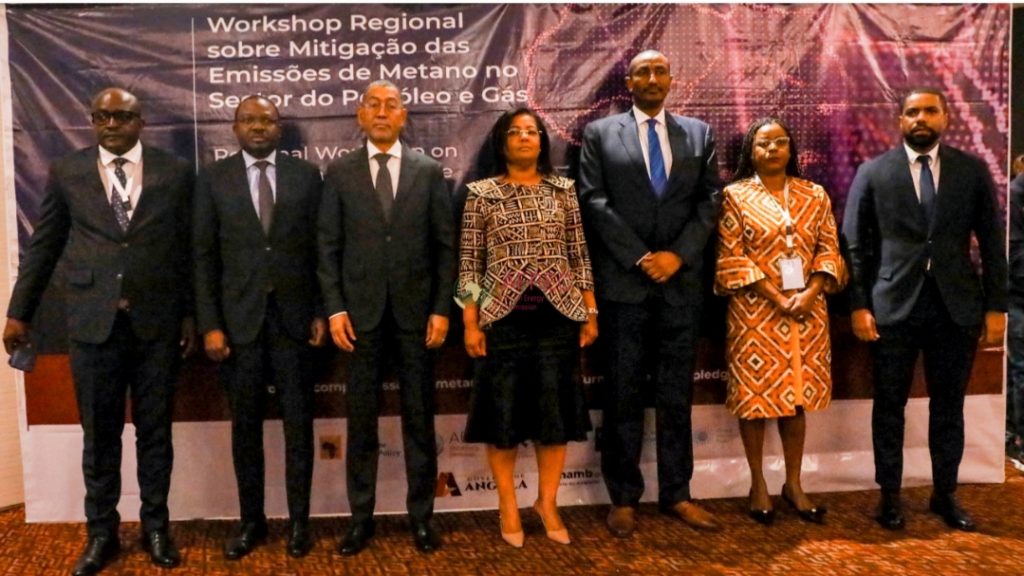
Speaking on behalf of the African Union, AFREC Executive Director Rashid Abdallah revealed substantial progress in building technical capacity across the continent. Since 2024, at least 170 professionals in the African energy sector have undergone specialized training covering Methane detection and measurement, Reporting and quantification, and Advanced mitigation techniques.
These capacity-building initiatives have already rolled out across several nations, including Algeria, Tunisia, Libya, Senegal, and Tanzania, drawing together regulators, environmental agencies, national oil companies, and technical experts.
Mr Abdallah firmly rejected the notion that climate action hinders African progress, reframing the emissions challenge as an economic driver.
”Methane mitigation is not a constraint on Africa’s development,” Abdallah stated. “It is an opportunity to reduce waste, improve operational efficiency, strengthen energy security, and enhance the market competitiveness of African oil and gas producers.”
Other notable dignitaries in attendance included Jorge Mingues, Provincial Vice-Governor of Luanda for the Economic Sector (representing Provincial Governor Luís Nunes), Various Secretaries of State, National Directors, and government consultants, and representatives from African regional institutions, civil society organizations, and international development partners.
As international methane regulations tighten, the workshop concluded its opening day with a call for Africa to remain highly proactive and ensuring the continent’s developmental realities are well-represented in global climate discussions while aggressively pursuing local sustainability goals.