AU Chair Voices Concern Over US Funding Cuts to Selected UN and International Organisations
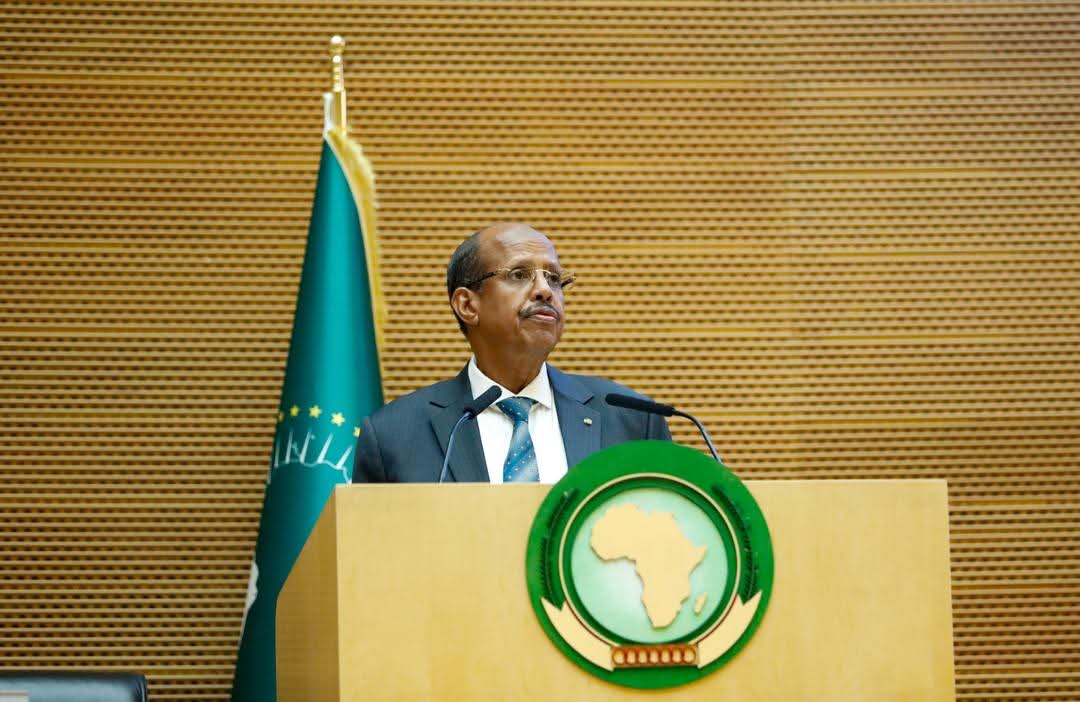
“The move will have a huge impact on Africa’s Development,Peacebuilding, Humanitarian Response, and the Implementation of AU’s Agenda 2063 and the SDGs 2030 Agenda,” Says Mohammed Youssouf
ADDIS ABABA, Ethiopia -The African Union Commission (AU) Chairperson Mohammed Youssouf, has taken note of the recent Presidential Memorandum issued by the USA government directing the cessation of their participation in, and funding to, certain United Nations (UN) entities, as well as the withdrawal from selected non-United Nations international organisations.
In a statement issued on Monday, 12th January, he said that he acknowledges the sovereign right of the US to review its international engagements in line with its national priorities and domestic processes.
The US, he further noted, has long been a pivotal partner of Africa and a central pillar of the multilateral system, whose leadership, resources, and values have contributed significantly to global peace, development, humanitarian action, and the advancement of human dignity.
Youssouf’s remarks align with the statement of the UN’s Secretary-General Antonio Guterres, underscoring the importance of a strong, effective, and inclusive multilateral system.
This, he however noted, comes at a time when: “the international community faces intersecting global challenges, including conflict, climate change, economic uncertainty, and public health threats.”
Affected Entities
US President Donald Trump had on 7th January officially withdrawn the United States from 66 international organisations, treaties, and conventions which also include 31 United Nations entities, and 35 non-UN bodies, as part of his “America First” policy.
The directive, issued in a presidential memorandum follows a year-long review of organisations deemed contrary to US national interests, security, economic prosperity, or sovereignty.
The memo instructs all executive departments and agencies to “take immediate steps” to end US membership, participation, and funding for the listed bodies “as soon as possible.”
In light of the foregoing, the continental body observes that a number of the entities affected by the Memorandum play an important role in supporting Africa’s development, peacebuilding, humanitarian response, and the implementation of Agenda 2063 of the AU and the 2030 Agenda for Sustainable Development Goals.
They include United Nations Economic Commission for Africa (ECA), the Department of Economic and Social Affairs (DESA), the United Nations Conference on Trade and Development (UNCTAD), the Office of the Special Adviser on Africa, UN Women, UNFPA, the Peacebuilding Commission and Peacebuilding Fund, as well as mechanisms dedicated to the protection of children in armed conflict.
“These institutions have been instrumental in strengthening national and regional capacities, promoting inclusive economic growth, advancing gender equality, supporting post-conflict recovery, and safeguarding vulnerable populations across the continent,” says the AU Chair.
He warns that any reduction in their operational capacity may have implications for development gains, peace consolidation efforts, and the resilience of communities, particularly in fragile and conflict-affected settings.
Youssouf underscores that Africa’s partnership with the US has consistently been anchored in shared interests which entails peace and security, economic opportunity, democratic governance, and global stability.
Multilateral platforms have historically served as effective vehicles through which these shared objectives have been advanced, delivering tangible results for both Africa and the broader international community.
Constructive Dialogue
In this regard, the AU expresses its hope that continued dialogue between the US, the UN, and international partners will help identify pathways to sustain critical multilateral functions, enhance efficiency and accountability, and ensure that the most vulnerable are not disproportionately affected.
The AU, however, reaffirms its commitment to constructive engagement with all partners, including the US, in strengthening a rules-based international order that responds to today’s global realities while preserving the spirit of solidarity and collective responsibility that has underpinned decades of international cooperation.
“The AU wish to express its unwavering commitment to multilateralism as a cornerstone for addressing global challenges and advancing shared prosperity, peace, and security,” the chair reaffirms.
romondi99@theeyeswatchmedia.co.ke