
Sugarcane Farmers Laud Sector Reforms,Vouch for the Right Representatives on the Kenya Sugar Board
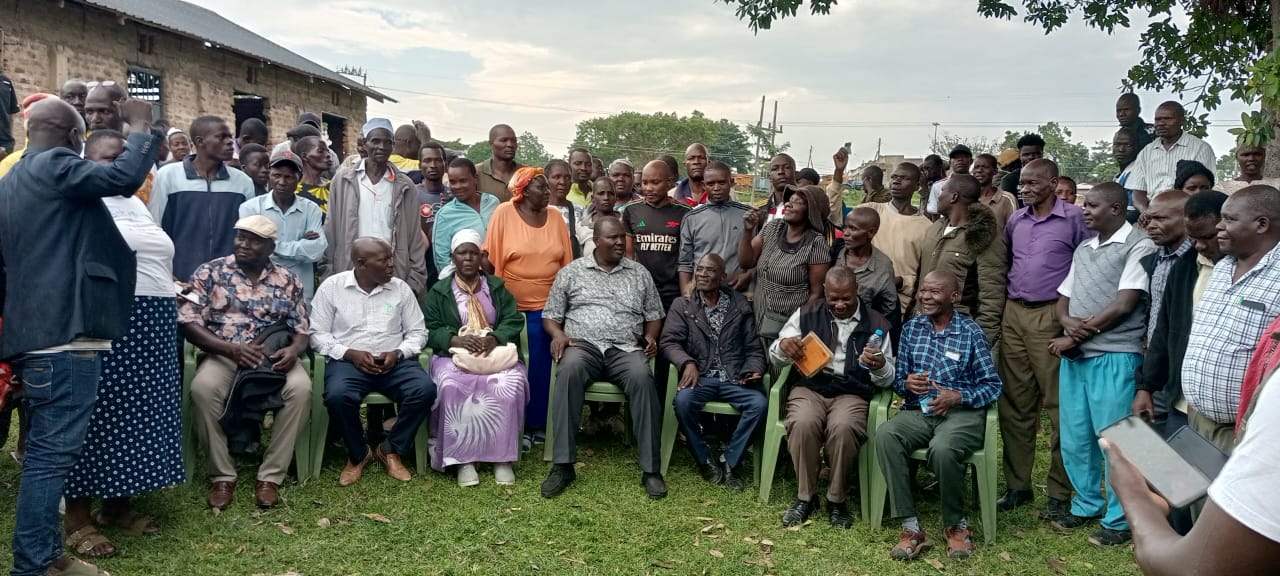
Sugarcane farmers from the Nyando Sugar Belt have expressed their satisfaction with the government’s recent reforms in the sector.
They highlighted the timely signing of the new Sugar Act No. 11 of 2024 by President William Ruto, which they reiterated has significantly improved their welfare.
The new act aims to address persistent challenges within the Kenyan sugar industry, including the importation of cheap sugar, outdated policies, and the decline in sugarcane yields and farmers’ returns.
One of the most impactful changes from the act was the write-off of long-standing debts, which had totalled Sh117 billion, thereby providing a new lifeline for farmers.
At a meeting held at P.A.G. Church-Kopere, in Muhoroni Sub-County, Kisumu County, representatives from sugarcane societies in the Gul, Kadan, and Yago areas expressed their full support for the recent 30-year lease of sugar factories to private millers.
They attested that this move will revitalise the sector and restore it to its former glory.
“We look forward to enhanced sugarcane production and timely payments for our cane deliveries,” they stated.
Farmers have also benefited from subsidised fertilisers introduced, and their representation in various sugar-related organisations is set to increase.
The new legislation provides for the addition of directors from the farming community to the Kenya Sugar Board (KSB), as well as representatives to the Pricing Committee and the Research Institute.
To address the ongoing cane shortage, the act allocates 40 percent for Cane Development.
Growers Representatives Elections
Section 6(1) of the Act allows for the election of five representatives from each sugar catchment area across the country to serve on the Board.
To ensure they receive fair benefits, farmers urged registered voters to elect leaders who have consistently championed their interests in the upcoming 2025 Grower Representative Zonal Elections.
“Some candidates are not even sugarcane farmers and attempt to deceive us,” they cautioned.
During the event, the Agriculture and Food Authority (AFA) Director, Hon. Samwel Onyango Ong’ow, was endorsed by official societies for the position of KSB Director for the Central Region Catchment Areas.
“Hon. Ong’ow is the right person to advocate for farmers’ interests, and we believe he will help secure jobs for our youth and women,” stated John Ogutu Nyonje, one of the farmers.
The former majority leader of the Kisumu County Assembly acknowledged the long-standing challenges faced by sugarcane farmers.
“Let us support President Ruto’s government. It has provided bonuses and paid Sh600 million to settle arrears owed to both farmers and workers,” he reiterated, adding that compensation will also be based on the sucrose content of sugarcane.
Farmers will be compensated for sugarcane products such as bagasse and electricity generated from sugar factories.
Ong’ow cautioned farmers to be wary of candidates who have not engaged with them for years but suddenly claim to represent their interests.
To further enhance representation and governance in the sector, on April 11th, Acting KSB Chief Executive Officer Jude Chesire issued guidelines for electing grower representatives to the Board.
“We are committed to ensuring a transparent, fair, and democratic process. The document outlines a clear framework for the electoral process, in adherence to the Sugar Act No. 11 of 2024,” said Chesire, who also serves as Vice Chairman of the Administrative Committee of the International Sugar Organisation (ISO).
Other key highlights include the establishment of an eleven-member election committee, criteria for candidate eligibility, the voting process, and mechanisms for dispute resolution.
The five sugarcane growing zones are: Kisumu, South Nandi, and Kericho (Central Zone); Kakamega, Siaya, and Busia (Western Zone); Bungoma and Trans Nzoia (Upper Western Zone); and Homa Bay, Migori, Narok (Southern Zone), along with Kwale and Tana River (Coast Zone).
“The election of grower representatives is not just a legal requirement—it is a strategic move to enhance grower participation in decision-making processes,” emphasised Chesire.